
AlexDreamliner // Shutterstock
The weight of winter: 5 tips for dealing with wet, heavy snow
Despite the disputed (and largely refuted) notion that the Inuit people of Alaska have dozens of different words for the white stuff that falls from the sky when moisture freezes, if you live in the northern U.S. you know there really isnât just one kind of snow. Thereâs the powdery variety, which skiers and snowboarders love. Toward the end of winter, you get that gray, slushy mess thatâs no oneâs favorite. And then, occasionally, thereâs wet, heavy snow thatâs great for building snowmen â but bad for backs and building.
According to the Weather Channel, this last type of snow is so heavy because it has a low snow-to-liquid ratio â meaning that thereâs a lot of water compared to the volume of snow. It usually forms during early- or late-winter storms when the temperatures are warmer as the snow falls, allowing flakes to melt. This makes it the perfect consistency for packing snowballs. But if youâre trying to remove that wet, heavy snow from your roof or driveway, it can quickly become troublesome.
HomeServe shares a few tips and tricks to keep in your back pocket this winter:
Shovel Safely
You may not think of shoveling as a strenuous activity, but it can be. According to the Cleveland Clinic, the hard work of scraping and throwing snow can put some individuals at risk for a heart attack. It can also aggravate or produce lower back pain. Plus, thereâs always the risk of slips and falls.
Because wet snow is so heavy, you have to exert even more force while shoveling. To avoid injury, the Cleveland Clinic recommends taking frequent breaks, working with others and staying hydrated while you shovel.
Choose the Right Snowblower
The name âsnowblowerâ implies that the device can easily manipulate snow. But wet snow is hard to move â even for a piece of machinery. Landscaping-tool reviewers advise clearing the snow as soon as it falls, lubing the chute where the snow shoots out of the machine with silicone spray or ski wax, and working slowly. However, the most important thing is having the right kind of snowblower.
With single-stage snowblowers, the auger both picks up and expels the snow. For that reason, theyâre best for shallow snowfalls and lighter types of snow. A two-stage snowblower is going to be a better buy if you often have to remove deep or heavy snow. This style has an auger that pulls snow up and an impeller that throws snow off to the side.
Look Out for Ice
According to AccuWeather, wet snow â due to its high water content â is also likely to accumulate an ice layer underneath. So, in addition to shoveling or blowing snow off your driveway, you might also need to de-ice. Sprinkle kitty litter, sand, salt or a store-bought ice melt on areas where you drive or walk.
Remember Your Roof
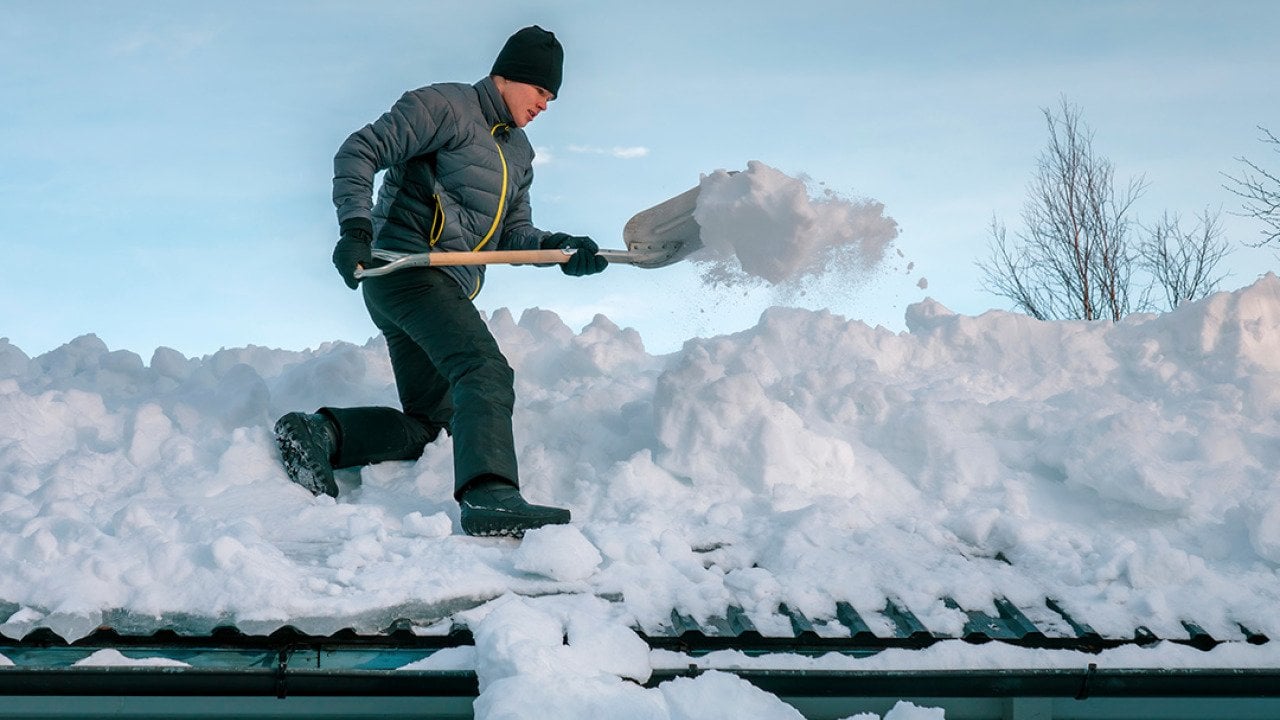
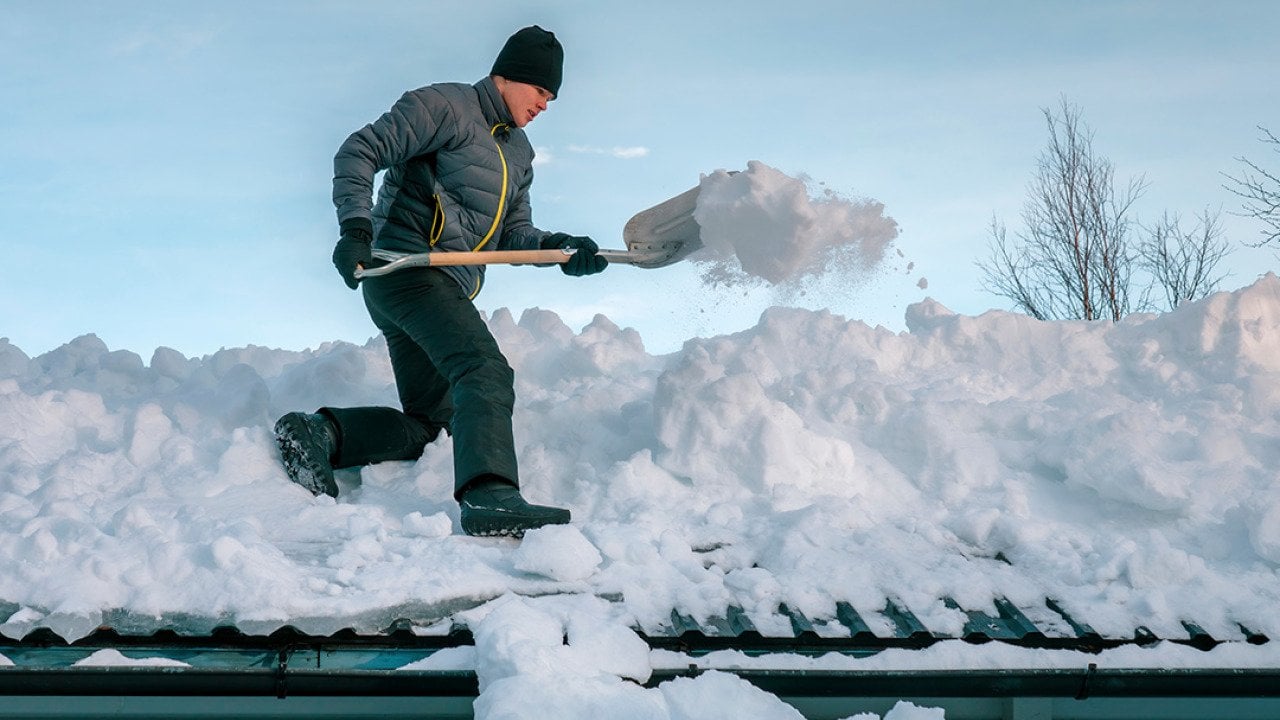
Your roof is strong, but itâs only designed to hold so much weight. The New Jersey Roofing Network says most roofs can hold 20 pounds per square foot of snow before they become stressed. Your roof may be able to handle up to four feet of the light, powdery variety. But because wet snow is so much heavier â by roughly three times â your roof may experience stress under one to two feet of snow. Signs of an overloaded roof include creaking and cracking sounds, warping and water stains on the ceiling.
Avoid climbing up on the roof, where it may be slippery. Instead, use a roof rake to clear as much snow as you can.
If itâs really coming down out there, you may also want to keep an eye on your deck. Most decks can withstand about 40 to 60 pounds of snow per square foot, depending on the building codes in your area.
Prep for Power Outages
Heavy snow can accumulate on all kinds of surfaces. Trees may bend or break under the weight, taking out power lines if they fall. In this case, you may be without power until the line can be repaired. Ideally, you would have prepared for an outage before the storm starts, but here are a few things you can do if the lights are already out:
- Make sure you have an adequate supply of food and water for you and your family for several days.
- Keep your pipes from freezing by insulating or circulating warm air around them. Make sure you know where your water shutoff valve is so you can turn off the water supply if your pipes do freeze.
- If you have a generator, nowâs the time to turn it on. Keep your major appliances running and heat sources on.
- No generator? Use an indoor propane heater or wood stove to keep warm. Avoid opening doors and windows to keep the heat locked in.
This story was produced by HomeServe and reviewed and distributed by Stacker.
