
Porsha Antalan // Shutterstock
Has the doodle craze gotten out of hand? The truth behind this trendy breed
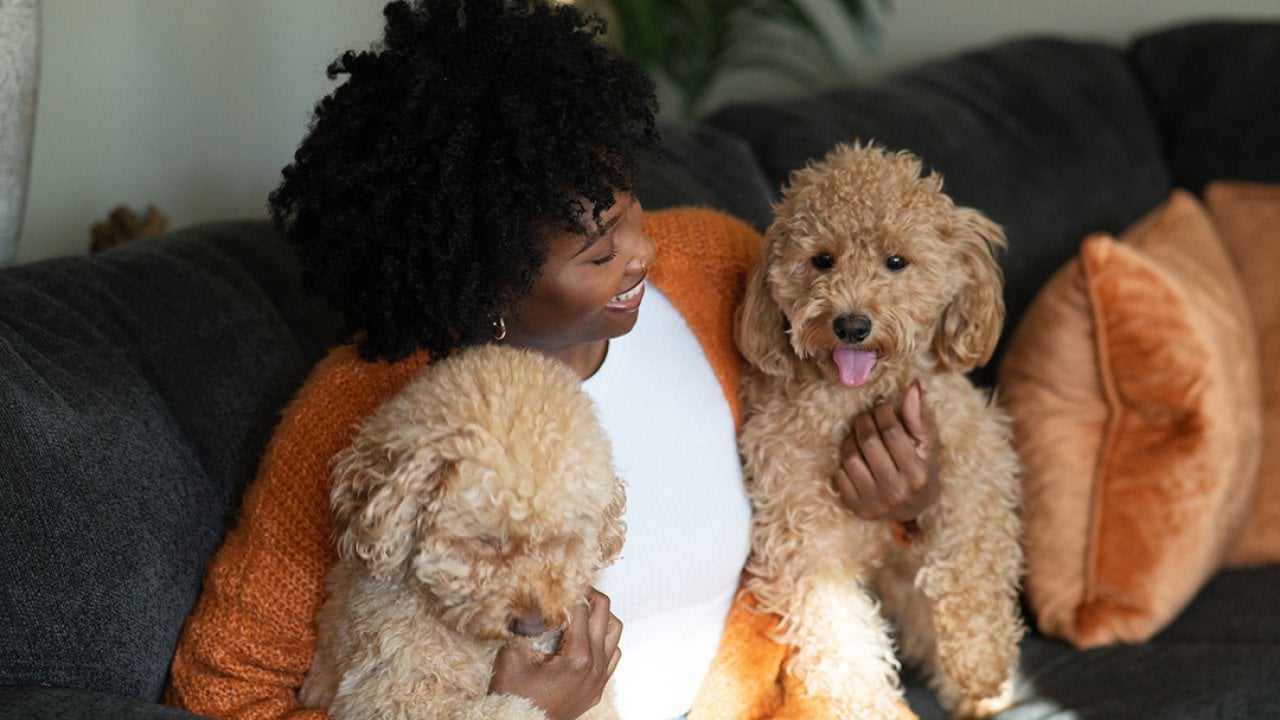
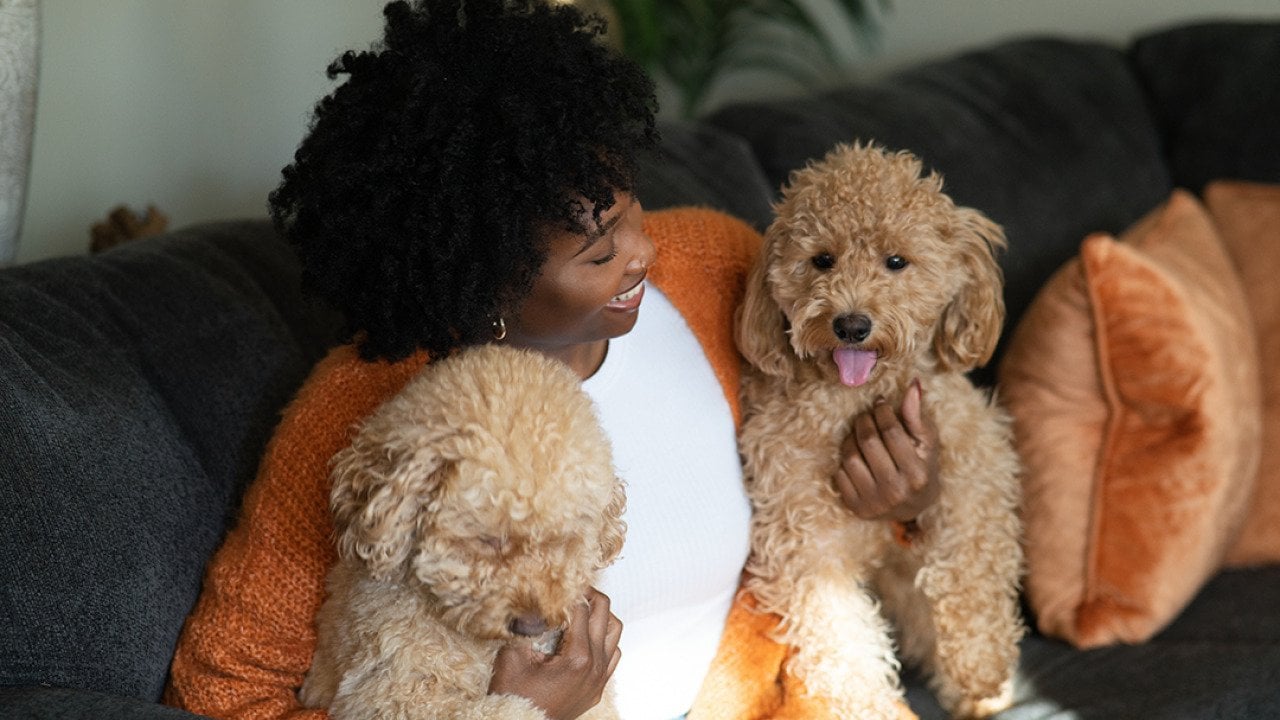
Is there any dog breed hybrid more popular these days than the Doodle? âDoodling,â it would seem, is the dog husbandry equivalent of adding cheese to food â it just makes everything better. Or does it? Why exactly are Doodles so popular, and do they really live up to the hype? Kinship breaks it down.
Disclaimer: If you, dear reader, have a Doodle in your family, know that your pup is perfect the way they are. Please give them extra treats for us!
What is a Doodle, really?
In Lauren Holmeâs Princess Grace Award-winning dog-park play Zeus 4, the character Phil gushes about his âpurebredâ Sheepadoodle, Lucy: âGenerations of breeding! Centuries of instinct!â he proclaims.
But, in reality, thereâs no such thing as a purebred Doodle. Doodles are crossbreeds: Poodles mixed with Golden Retrievers, Cane Corsos, Schnauzers, and even Corgis to create Goldendoodles, Canoodles, Schnoodles, and Corgipoos, just to name a few. Of course, Poodles (like all dogs) have long procreated with other breeds, but until 1989, the offspring that resulted from those couplings were simply referred to as mutts. Then, Australian guide dog trainer Wally Conron bred a Poodle with a Labrador for a blind client whose husband was allergic to long-haired dogs, and suddenly the âLabradoodleâ was born.
Fast forward nearly 40 years, and Doodles are some of the most popular pets there are. Breeders will often charge $5,000 or more for a Doodle puppy and Doodles at shelters rarely go more than a day or two without being adopted. In fact, Doodles are so popular that social media-savvy shelters like the Animal Care Centers (ACC) of New York have taken to putting curly wigs on their other dogs in a comedic attempt to get them adopted.
âPeople definitely come to the shelter looking for hypo-allergenic dogs, which they believe Doodles to be because they often inherit the Poodleâs curly coat, which tends to shed less,â says Katy Hansen, ACCâs director of marketing and communications. Fortunately, the staff at ACC are skilled at matching potential pet parents with the best dog for them, even if it doesnât look exactly like the dog they had in mind when they arrived. âIn the end we know that people donât fall in love with a breed label, they fall in love with the dog in front of them.â
ACC, like many shelters, does not use breed labels because, without DNA testing, it would be impossible to know a dogâs breed for sure. âThe majority of the dogs who come to us are listed simply as mixed breeds and, in essence, thatâs exactly what any kind of Doodle is,â Hansen says.
âDoodles are not a breed that is recognized by the American Kennel Club (AKC) or any other respected body,â says Annie Grossman, certified dog trainer and behaviorist and author of the book, How to Train Your Dog With Love + Science. This isnât a knock. Itâs just a fact. And who knows? One day, this could change.
âMany breeds began as a mix of two or more breeds, so it might be possible they’re simply not breeds yet,â she says. âMost breeds were created, over time, to fill some kind of need, whether that be working certain jobs on a farm, helping hunters, or simply keeping laps warm. If Doodles are currently being bred like crazy, I think it’s because they have certain traits that appeal to modern dog owners who often live in tight quarters and have allergies and designer sofas.â
If you think you know exactly what youâre getting into when you get a Doodle, though, think again. âWith Doodles, youâre rolling the dice,â says veterinarian Dr. Huyn Han of Telavets.com. âYou might get a pup with the Poodle coat and Lab temperament, or vice versa. That unpredictability can be fun, but it can also mean surprises in size, coat type, and energy level. Health-wise, genetic diversity can sometimes reduce certain inherited diseases, but only if the parents were carefully selected and screened, which isnât always the case.â
The only thing that is really guaranteed with Doodles is the high price. âDesigner crosses are usually very expensive to purchase,â says veterinarian Dr. Liza Cahn of Embrace Pet Insurance. âAnd their high demand may lead to irresponsible breeding practices or owners who do not understand what theyâre getting into.â
The hypoallergenic myth
A big part of the Doodleâs popularity has to do with its reputation for being hypoallergenic. âBut contrary to popular belief, no dog is 100% hypoallergenic,â Dr. Cahn says. âPet allergens include proteins in the skin cells (dander), saliva, and urine, although breeds that are low shedders (such as Poodles) may be a better choice for people with [certain] allergies.â
The problem is that there is really no predicting just how much a Doodle is going to shed. True, curly-haired breeds tend to shed less, but the Doodle is not a purebred; itâs a hybrid. And if one of its parents has long hair that sheds a lot (like a Labrador or a Golden Retriever) the resulting Doodle could share this trait.
Their hair may not even be particularly curly. It depends on which genes come from which parents, and thatâs not something that a breeder can control, especially if they are doing first-generation mixes (Poodle to non-Poodle) as opposed to breeding a Doodle with another Doodle and selecting specifically for that trait. And even if they are, results are never guaranteed.
Doodles have health and grooming challenges
Many people also assume that Doodles, being hybrids, are healthier than purebred dogs, which have a reputation for shorter lifespans and more breed-specific health issues. But this is not necessarily the case.
âDoodles inherit health risks from both sides,â Dr. Han says. âWe frequently see hip dysplasia, elbow dysplasia, allergies, ear infections, and genetic conditions like progressive retinal atrophy. Because theyâre so popular, some breeders focus more on producing puppies quickly than on health testing, which increases the risk of inherited problems. And at TelaVets, we see many Doodles who have chronic ear infections.â
And just because a Doodleâs coat doesnât shed a lot doesnât mean it is low maintenance. âWe have seen many Doodles with severe matting because owners didnât realize how much grooming that cute, fluffy coat requires,â Dr. Han says. âMany times, our Doodle patients have had to be fully shaved down under sedation because the mats were pulling on their skin and causing sores ⦠Brushing once a week is not enough.â
Doodle behavioral traits and training are not so black and white
Fans of Doodles often talk about their wonderful personalities â smart, playful, energetic, and companionable â but just like with other genetic factors, these traits are not guaranteed, especially in the case of first-generation crossbreeding.
âSome Doodles are going to be great. Some are going to be annoying,â says Grossman, whoâs a former Doodle parent. âI had a Yorkiepoo for 15 years. He was very smart and sweet and communicative. But whether that was because of his breed or because of the thousands of hours, I spent training him and engaging with him so that we understood each other, well … itâ hard to pick apart.â
All dogs are individuals and should be treated as such, but âDoodles can inherit both physical and personality traits from each of their parent breeds; often with greater variability than is typical in purebreds,â Dr. Cahn says.
Dr. Han adds that Goldendoodlesâ tendency âto be very high-energyâ comes from their Golden Retriever parent, while Bernedoodles get their stubborn streak from their Bernese parent.
Doodles also require a tremendous amount of training â Poodles are working dogs after all, as are many of the breeds they are crossed with to create Doodles â which means they are generally smart, energetic, and easily bored. And a bored dog with a lot of energy can quickly become destructive and disruptive if you are unwilling or unable to put in the time and effort to train them and keep them adequately stimulated.
Consider breeding practices and ethics
Content creator Lindsey Hutslar, who has a degree in animal biology from the University of Cincinnati and has worked closely with veterinarians and other animal professionals for the last 10 years, makes videos exposing unethical Doodle breeders.
Once she looks past these breedersâ fancy websites, seemingly heartfelt mission statements, and professional photography, what she often finds are people who are not doing appropriate health testing (even if they claim otherwise), not keeping or sharing relevant documentation about puppies or their parents, not providing proper vet care and socialization, and offering no guarantees, support, or remuneration of any kind if the puppies they sell are not as advertised.
âI think that at best, Doodle breeders are misguided and/or poorly educated on dogs, dog breeds/behavior, and genetics,â she says. âAt worst, I think they favor profit over all else â they saw a rising trend with the ability to bring in big bucks and ran with it.â
Some of the issues around Doodle breeding could maybe be resolved if there was a clear standard in place, but there isnât. And itâs not just because the AKC refuses to recognize or establish one.
âThereâs no drive to create a real standard [among breeders, either],â Hutslar says. âOnes that have been created are vague and involve misinformation (i.e. claiming a certain mix but allowing colors like merle that do not exist in any of those breeds). Thereâs also no drive to prove their dogs; they just breed whatâs available and, more often than not, itâs repeat litters to other dogs they also own. Weâre several decades into this Doodle craze, and yet we are still consistently seeing first-generation mixes â Poodles mixed with every random breed under the sun.â
Look beyond the trend
As for why people are so keen on Doodles these days? Well, apart from them being extremely trendy (and cute!), they also have a reputation for being low-maintenance family dogs. But they donât always live up to those claims.
âSome are very nice dogs,â Hutslar says. âBut many are very anxious. Many suffer from severe allergies. It is also very common to see them casually neglected. Iâm sure any groomer you ask would attest to how frequently we see them come in with matting all over, which in part I blame on the breeders consistently pushing the narrative that they are low-maintenance dogs.â
âI like Doodles as individuals,â Dr. Han says. âThey can be smart, friendly, and fun, but I wouldnât call them the perfect designer dog. People expect them to be hypoallergenic, easy-going, and completely healthy, but thatâs not realistic. If someone asked me if getting a Doodle was a good idea, Iâd say: Make sure youâre prepared for high grooming needs, a lot of energy, and potential health issues. Theyâre not low-maintenance dogs, and first-time dog owners are sometimes caught off guard.â
Ultimately, Doodles can make wonderful companions, but you have to be willing to put in the work. And if you want one of these pups, there is no reason to go to a breeder. So many of these designer breeds end up at shelters these days. You can contact purebred rescues or other organizations that save these dogs from unethical breeding practices.
Plus, adoption from a shelter is so often the more affordable and more reliable choice, especially for first-time dog parents. Many shelter dogs are out of their puppy phase, which means theyâve actually developed their own personalities. Plus, shelter workers, like the ones at ACC, know who these dogs are â their likes and dislikes, their habits and how they respond to training, medical issues, and allergies, etc. â and they can help pair you with a dog who suits your lifestyle and personality.
Forget about breed and reputation. Consider the individual dog in front of you. Let go of your biases and open your heart and home to the pup whoâs right for you.
This story was produced by Kinship and reviewed and distributed by Stacker.
