
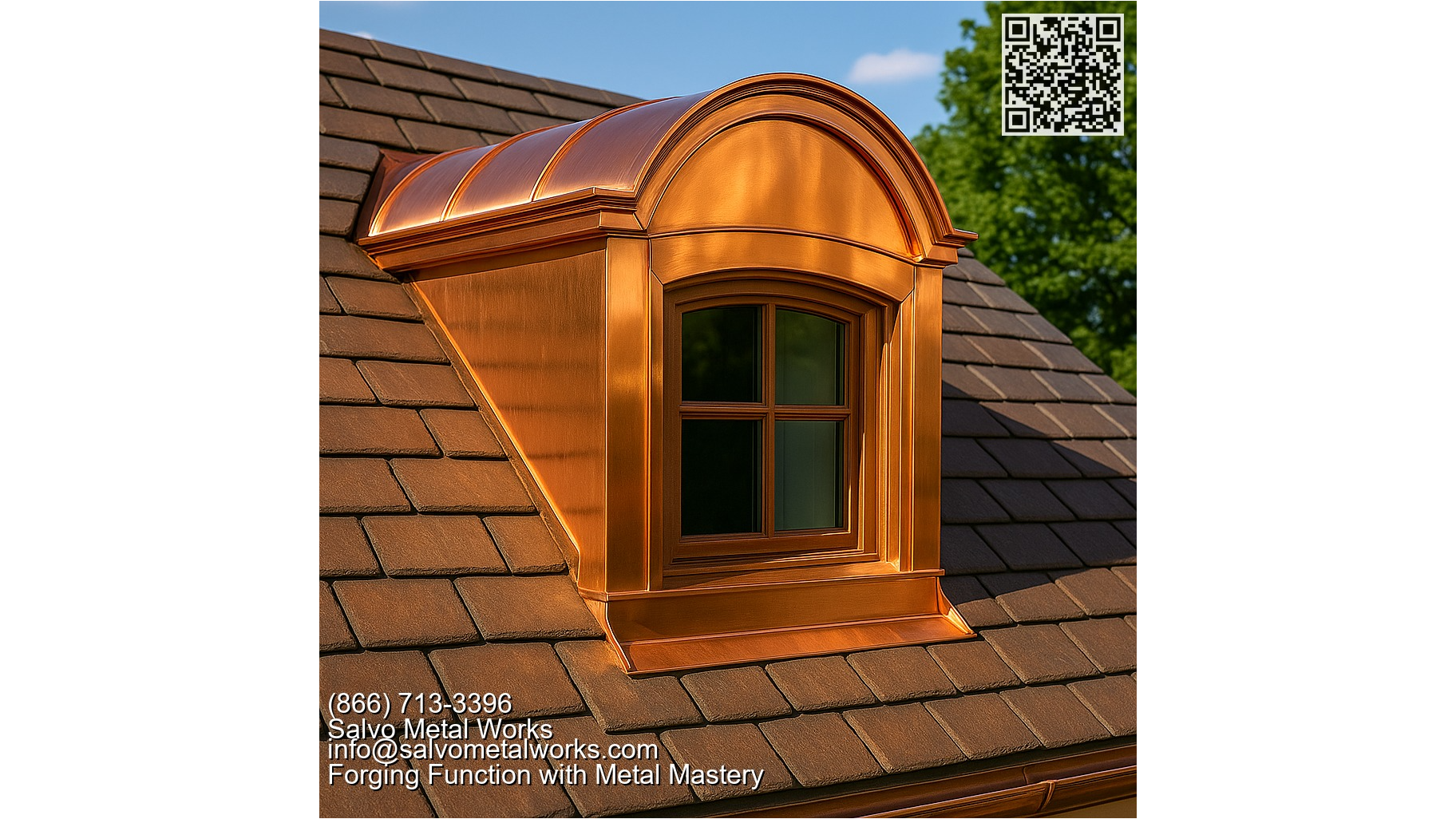
Key Takeaways
- Copper architectural elements can last over 100 years, with the Statue of Liberty standing as proof after 140+ years of exposure
- Zinc’s self-healing patina naturally reforms to protect against corrosion and minor scratches for century-long performance
- Aluminum’s superior strength-to-weight ratio enables large glass spans in modern architectural designs
- Salvo Metal Works’ traditional fabrication methods combined with 75% custom manufacturing deliver precision that mass production cannot match
- Expert metal artisans with decades of experience create complex geometries that push architectural boundaries
The marriage of time-tested craftsmanship with premium metals transforms architectural visions into enduring reality. When master artisans apply generations of knowledge to copper, zinc, and aluminum fabrication, the results transcend typical construction materials to become lasting architectural statements.
Four Decades of Master Craftsmanship
True expertise in metal fabrication develops through decades of hands-on experience, not classroom theory. Master craftsmen who have spent 40+ years perfecting their techniques understand how each metal responds to heat, pressure, and shaping forces. This deep knowledge allows them to manipulate copper, zinc, and aluminum in ways that achieve complex architectural forms while maintaining structural integrity.
The difference between machine production and artisan craftsmanship becomes evident in the finished product’s precision and longevity. Experienced fabricators recognize subtle material characteristics that automated processes miss, leading to superior joints, seamless integration, and weather resistance. Salvo Metal Works exemplifies this approach with their family-owned operation that has specialized in handcrafted architectural metal products since 2005, bringing extensive expertise to custom projects.
When architects specify handcrafted metal elements, they gain access to design possibilities that standard manufacturing cannot deliver. Master artisans can create one-of-a-kind pieces that perfectly match architectural intent, whether that involves intricate facade details, custom roofing elements, or complex geometric forms.
Copper’s Century-Long Architectural Performance
Proven 100+ Year Lifespan in Real Applications
Copper delivers exceptional longevity that often exceeds 100 years in architectural applications, with some estimates suggesting lifespans of centuries or even a millennium. The Statue of Liberty provides compelling evidence of copper’s durability, having maintained its structural integrity for over 140 years despite constant exposure to marine environments and weather extremes. This real-world performance demonstrates copper’s value for long-term architectural investments.
Material science research confirms copper’s natural resistance to corrosion stems from its atomic structure and chemical properties. Unlike other metals that weaken over time, copper actually becomes more protective as it ages, developing natural barriers against environmental stresses that would damage lesser materials.
Self-Protecting Patina Formation
The protective patina that forms on copper surfaces creates a natural barrier against corrosion while adding distinctive visual character to architectural elements. This verdigris coating develops gradually through chemical reactions with atmospheric elements, forming a stable protective layer that actually strengthens over time. The patina process allows copper to self-maintain without requiring chemical treatments or regular maintenance cycles.
Architects can specify copper with confidence knowing that the material will continue protecting itself throughout the building’s lifecycle. The patina formation process also provides aesthetic benefits, creating the sought-after green coloration that adds character and visual interest to roofing, facades, and decorative elements.
Complex Geometries for Custom Designs
Copper’s malleability enables skilled craftsmen to create intricate shapes and complex geometries that would be impossible with more rigid materials. Master fabricators can form copper into flowing curves, sharp angles, and detailed ornamental elements while maintaining structural strength throughout the forming process. This flexibility opens design possibilities for architects seeking to create distinctive building features.
The material’s workability allows for integration between different architectural elements, creating cohesive designs that appear to flow naturally from one component to another. Custom copper fabrication can accommodate unique project requirements, from historically accurate restoration work to cutting-edge contemporary designs.
Zinc’s Self-Healing Properties
Malleable Shaping for Intricate Facades
Zinc’s exceptional flexibility and malleability make it ideal for creating intricate facade designs and flowing architectural structures. The metal can be easily shaped, bent, and molded into various configurations without losing structural integrity or developing stress fractures. This workability enables architects to specify complex, organic forms that create visual impact while maintaining practical performance.
Master craftsmen can manipulate zinc into sharp corners, gentle curves, and detailed patterns that improve building aesthetics. The material’s responsiveness to traditional metalworking techniques allows for precise control over final dimensions and surface characteristics, ensuring that finished elements meet exact architectural specifications.
Century-Long Durability with Natural Protection
Zinc forms a protective patina similar to copper, but with unique self-healing properties that automatically reform over time to protect against corrosion and minor surface damage. This natural healing process extends the material’s lifespan to a century or more without requiring replacement or significant maintenance interventions. The protective coating continuously regenerates, maintaining barrier effectiveness throughout the building’s service life.
Research shows that zinc’s sustainability credentials include complete recyclability and lower energy requirements for processing compared to other architectural metals. This environmental advantage, combined with its extended lifespan, makes zinc an excellent choice for green building projects and sustainable construction practices.
Aluminum’s Strength-to-Weight Advantage
Large Span Capabilities for Glass Integration
Aluminum’s superior strength-to-weight ratio enables large structural spans that are particularly valuable for modern architectural projects requiring extensive glass integration. This capability allows architects to design dramatic curtain wall systems and expansive glazed areas that would be impractical with heavier materials. The material’s structural efficiency supports building designs while minimizing overall structural loads.
Engineering reports highlight aluminum’s role in enabling the large glass spans seen in contemporary skyscraper construction. The material provides sufficient structural support while remaining light enough to avoid excessive foundation requirements or structural complications.
Versatile Finishes and Custom Patterns
Custom aluminum fabrication offers remarkable versatility in finishes, shapes, and surface patterns that can be tailored to specific architectural visions. Fabricators can create anodized finishes, powder-coated surfaces, or brushed textures that complement building aesthetics while providing weather protection. The material accepts various treatment processes that improve both appearance and performance characteristics.
Aluminum’s adaptability extends to decorative applications where intricate patterns and detailed surface treatments create visual interest. Custom fabrication techniques can produce unique architectural features that become signature elements of building design, from perforated screens to sculptural cladding systems.
Old-World Techniques Meet Modern Architecture
In-House Fabrication Process
In-house fabrication provides complete quality control from initial design through final delivery, ensuring that every component meets exact specifications without compromise. Master craftsmen working within integrated facilities can maintain consistent standards while adapting techniques to specific project requirements. This approach eliminates the quality variations that often occur when fabrication is distributed across multiple vendors.
The in-house model also enables real-time collaboration between designers and fabricators, allowing for design refinements and technical optimizations throughout the production process. This close coordination results in superior finished products that fully realize architectural intent.
75% Custom Manufacturing Approach
Salvo Metal Works’ custom manufacturing approach handles 75% of production as made-to-order work, providing the flexibility needed for unique architectural projects. This model allows fabricators to accurately manufacture specific products when needed, avoiding the limitations of standardized offerings. Custom work ensures that each piece fits perfectly within the overall design scheme while meeting exact dimensional and performance requirements.
The made-to-order approach also reduces waste and inventory costs while enabling rapid response to changing project specifications. Architects can specify exactly what they need without being constrained by available stock items or standard product lines.
Quality Control Standards
Rigorous quality control standards ensure that handcrafted metal products meet the highest performance and aesthetic requirements. Master fabricators implement multiple inspection points throughout the production process, catching potential issues before they affect finished components. This attention to detail prevents costly field corrections and ensures that installed elements perform as designed.
Quality control extends beyond dimensional accuracy to include surface finish consistency, joint integrity, and weather resistance testing. These standards provide architects and builders with confidence that specified products will deliver expected performance throughout their service life.
Family Expertise Delivers Unmatched Quality
Family-owned fabrication businesses often maintain quality standards and craftsmanship traditions that larger corporations cannot match. Multi-generational expertise creates deep institutional knowledge about metalworking techniques, material properties, and quality standards. This accumulated wisdom results in superior products that reflect decades of refinement and improvement.
The personal investment that family owners have in their reputation drives continuous attention to quality and customer satisfaction. Family businesses typically maintain closer relationships with clients and take greater pride in each completed project, resulting in higher overall quality and better long-term performance.
When architects choose handcrafted metal fabrication, they gain access to expertise that mass production cannot replicate and quality that stands the test of time. Contact Salvo Metal Works to learn how four decades of master craftsmanship can bring your architectural vision to life.
Salvo Metal Works
566 W 15th Ave
Naperville
IL
60562
United States
