
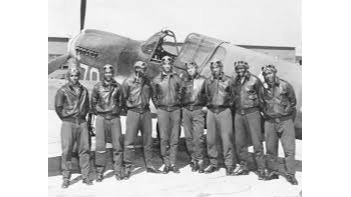
Black soldiers have served in every major American war, yet their stories remain among the least documented and most endangered parts of the nation’s history, quietly fading while the rest of military history gets preserved, celebrated, and retold.
When physical landmarks go unfunded and community stories go untold, whole generations miss out on a fuller, truer version of American history. Some of that history is already disappearing, and the effort to save what remains is more urgent than most people realize.
Chanute Air Force Base: A Critical but Overlooked Piece of History
Established in 1917, Chanute Air Force Base was one of the oldest and most important training installations in the United States Air Force. Named after Octave Chanute, a pioneer in aviation, the base became a central hub for technical training, engineering advancement, and military readiness for decades.
During World War II, while the Tuskegee Airmen trained as pilots at Tuskegee Army Air Field in Alabama, Chanute Air Force Base played a vital supporting role in training thousands of enlisted personnel, including Black airmen, in aircraft maintenance, engineering, and technical operations.
At a time when the U.S. military was still segregated, Chanute was one of the few locations where Black servicemen were trained in critical aviation support roles. These airmen were essential to the success of the Tuskegee Airmen’s missions, ensuring aircraft were maintained, repaired, and mission-ready.
In many ways, Chanute represents the backbone of the Tuskegee Airmen’s success, the often-unseen technical expertise that made their historic combat achievements possible.
Yet today, this history is largely unknown in its own community, underrepresented, and at risk of being forgotten.
When History Disappears, So Does the Truth
Most people know the broad outlines of American military history, but the specific contributions of Black servicemen and women rarely appear in textbooks, museums, or public memory with any real depth. That gap does not only affect Black communities. It leaves everyone with an incomplete understanding of who helped build, defend, and shape this country.
Black military history is not a side story. It is part of the main story. From the Revolutionary War to the present day, Black Americans have served with distinction, often while facing discrimination both inside and outside the military.
The Tuskegee Airmen are one of the best-known examples of that reality. Their service during World War II helped challenge racist assumptions about who could lead, fly, and serve at the highest levels. But while new projects honoring these heroes continue to emerge in 2026, their legacy is only one chapter in a much larger history that still remains under preserved.
The Real Cost of Letting These Stories Fade
Physical landmarks are disappearing faster than many people realize, and once they are gone, they are gone for good. Historic Black cemeteries, homes, churches, training sites, and community spaces all carry pieces of the record. Together, they tell the story not only of military service, but also of the civic life and local leadership that surrounded it.
When these places are neglected, the loss is deeper than architecture. It erases context. It removes the settings where courage, sacrifice, exclusion, and achievement actually unfolded. Documents can preserve facts, but physical places help people understand that history as something lived by real individuals in real communities.
That is especially important when remembering groups such as the Tuskegee Airmen. Their story becomes far more meaningful when it is connected to the places, institutions, and barriers that shaped their path. Without that context, even widely recognized achievements can become flattened into symbols rather than understood as part of a larger struggle for dignity, citizenship, and recognition.
More Than Military History, It Is a Mirror
Black military history does not sit apart from American history. It reflects the country back to itself. It reveals both the ideals the nation claims to stand for and the contradictions it has often failed to resolve.
Black service members fought for freedom abroad while being denied full rights at home. That tension runs through generation after generation of American history. It appears in the experiences of Civil War soldiers, World War II veterans, and later generations who returned home to unequal treatment despite their service.
This is part of why these stories matter so much today. They do not simply honor sacrifice. They help explain how the country has changed, who pushed it forward, and what remains unfinished. The story of the Tuskegee Airmen endures in part because it captures that tension so clearly, but many other stories carry the same weight and deserve the same level of preservation.
What Young People Gain From Knowing This History
For young people, this history does more than inform. It shapes identity, expectation, and possibility. Seeing Black Americans represented in stories of leadership, discipline, and service gives young people something concrete and verifiable to hold onto. It shows that their history includes not only struggle, but achievement, resilience, and contribution at the highest level.
That matters especially when so much of this history has been overlooked or reduced to a few familiar names. The more fully it is preserved, the more accurately young people can understand both their communities and their country. A student who learns about the Tuskegee Airmen should also have the opportunity to learn about the many lesser-known Black soldiers, sailors, nurses, pilots, and veterans whose service helped shape American history in equally meaningful ways.
This knowledge benefits everyone, not only those who see themselves directly reflected in it. A fuller history creates better citizens because it gives people a more honest understanding of what service, democracy, and equality have looked like in practice.
Why Preservation Matters Now
Preservation is not only about keeping old buildings standing, although that matters. It is about funding research, protecting landmarks, recording oral histories, supporting museums and archives, and making sure these stories remain visible in public life.
When preservation works, it keeps history from being reduced to isolated memories. It connects people to place, to community, and to the individuals whose lives made that history real. It ensures that Black military history is not treated as an optional addition, but as an essential part of the national record.
This work becomes even more urgent as time passes. Each year without action means more deterioration, fewer firsthand accounts, and a weaker physical record. Once that evidence is gone, recovering the full story becomes much harder.
The Window to Act Is Narrowing
What communities choose to protect says something about what they believe is worth remembering. If Black military history continues to be under-funded, under-documented, or treated as secondary, the message is clear. But if communities invest in preserving it, they help restore a fuller and more honest account of the American past.
The Tuskegee Airmen remain an important part of that story, not because they should stand in for all Black military history, but because they help illuminate what so much of that history represents: excellence in the face of exclusion, service in the face of inequality, and achievement that deserves to be remembered in full.
Preserving Black military history is not about looking backward for its own sake. It is about making sure the truth remains available to future generations. Without that effort, the country risks losing not only important stories, but a clearer understanding of itself.
The H.O.Y.C.E. Center
Connect@hoycecenter.org
The H.O.Y.C.E. Center
601 Century Boulevard, Bay #8
Rantoul
Illinois
61866
United States
